Google's AI Mode Just Got Connected Apps. Here's What It Means for AI Agents
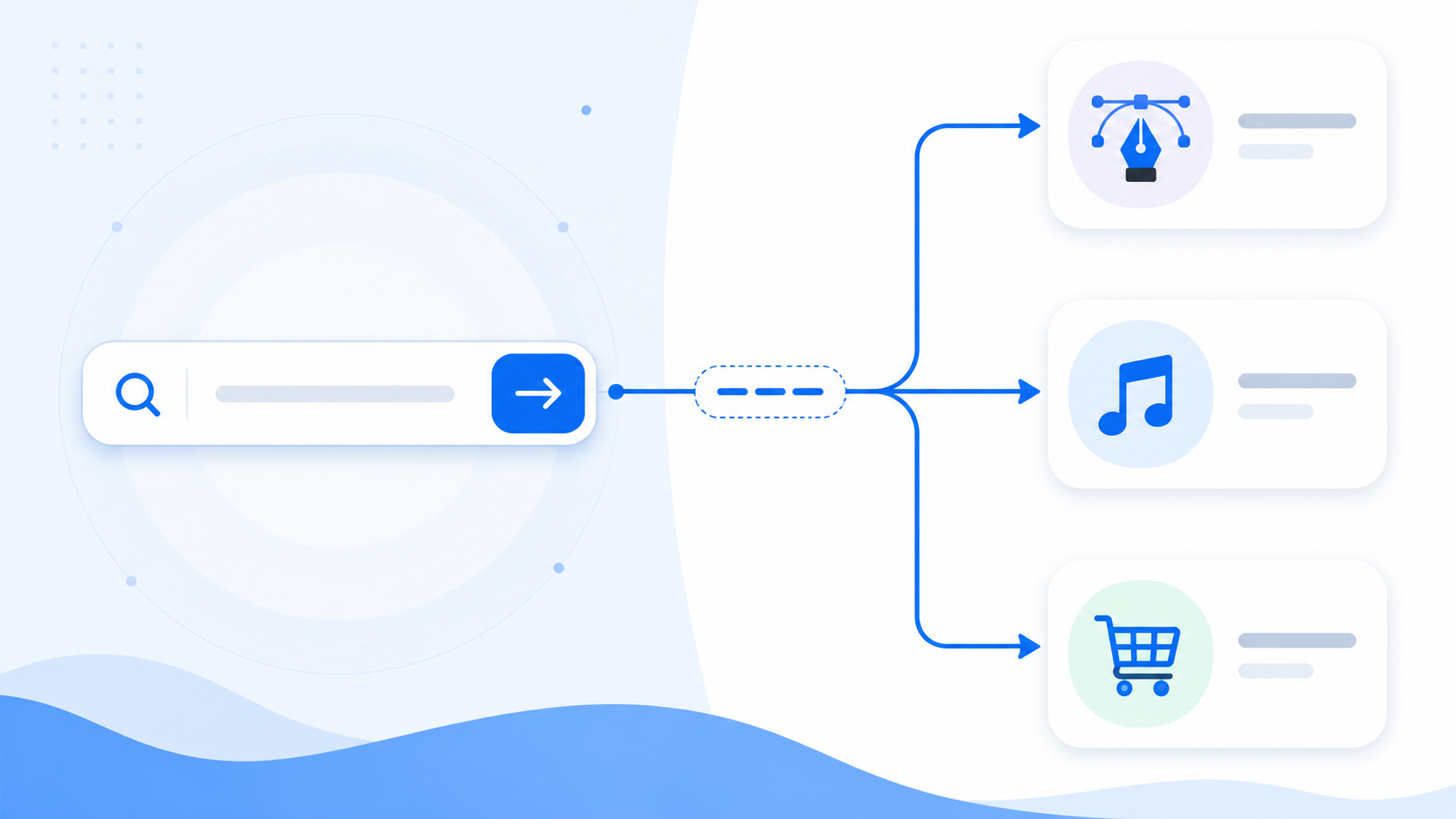
Google just gave Search's AI Mode something it didn't have before: the ability to act, not just answer. Starting this week in the US, AI Mode can connect to Canva, YouTube Music, and Instacart, passing a prompt to each service and getting back a design option, a saved playlist, or a ready-to-check-out cart. You never leave the search box, but the work actually happens somewhere else.
For anyone building with AI agents, this is worth more attention than the feature list suggests. It's not really a shopping story or a music story. It's a case study in how a company with billions of users decided to scope agent permissions in production, and that scoping is the interesting part.
What Actually Shipped
The rollout is narrow by design. Three partners, one country, one language, and three specific workflows:
Canva takes a description of a project, like a party flyer, and returns template options generated inside Canva's own system. Search supplies the starting prompt; Canva remains the place where the actual design work happens.
YouTube Music goes a step further. AI Mode can turn a prompt into a playlist, show it inline as a card, save it to the user's library, and hand off playback to the YouTube Music app. Creation and a small library action, but not full control of the account.
Instacart keeps the tightest boundary. AI Mode can build a cart from a grocery prompt, but checkout stays entirely in Instacart's interface. Google's AP2 payment protocol, which records user approval through a signed "Cart Mandate," did something similar last year: separate the AI's job (assembling the request) from the human's job (authorizing the money).
None of these are new categories for Google. It tested Canvas-style creation tools in AI Mode earlier in 2026, rolled out opt-in Gmail and Photos access in January so Search could use personal context, and expanded restaurant booking to eight countries in April. What's new is the direction of the arrow. Gmail and Photos feed information into Search. Canva, YouTube Music, and Instacart take instructions out of Search and into another product's workflow.
The Design Pattern Worth Noticing
Strip away the branding and there's a fairly disciplined agent architecture underneath this launch. Google isn't handing AI Mode a general set of credentials and letting it improvise inside three apps. Each connection is a defined, bounded workflow: a specific prompt shape goes in, a specific kind of output or action comes back, and the partner app keeps ownership of anything that touches an account, a payment, or a saved asset.
That's a meaningfully different bet than "give the model broad tool access and trust it to behave." It's closer to how a careful engineering team would design a permissions model for a junior employee: narrow scopes, explicit checkpoints, no ambiguity about who has final say over checkout. Google has stayed quiet on the technical plumbing behind the handoff, but the shape of it, prompt in, defined action out, partner retains control of sensitive steps, is a pattern any team shipping AI agents right now should recognize.
It also explains why Google picked these three apps first. Canva, YouTube Music, and Instacart each have a single, well-defined action that's easy to bound: generate a design, save a playlist, populate a cart. Compare that to something like email or calendar management, where the action space is much harder to constrain, and it's not surprising Google left those for a separate, opt-in "Personal Intelligence" track instead of bundling them into the same connected-apps model.
Google Is Late, Not First
Google isn't introducing the idea of an assistant that reaches into other apps. OpenAI's ChatGPT and Anthropic's Claude already support third-party app integrations, and Google's own Gemini app has offered connections to services like WhatsApp, Spotify, OpenTable, and Booking.com for months. What's changing is that Search, arguably Google's highest-traffic surface, is now getting the same treatment Gemini already had.
That matters for competitive reasons more than technical ones. Search sees a scale of queries that Gemini simply doesn't, and every one of those queries is now a candidate for "should this become an action instead of an answer." Google has said more partners are coming but hasn't named them or given a timeline, which suggests the company is still watching how these three integrations perform before it opens the model up further.
What to Watch Next
A few things will tell you whether this is a real platform shift or a demo that stalls out:
Whether Google names new partners quickly. Three apps is a pilot. A dozen apps is a platform.
Whether the bounded-permission model holds as scope grows. Checkout control is easy to protect when there's one payment partner. It gets harder as the number of connected services increases.
Whether developers get any visibility into the integration layer. Right now this is a closed, Google-curated list. Whether that stays closed or opens into something resembling an API will shape how much of this pattern outside teams can actually build on.
For now, treat this as a signal rather than a tool you can build against. The interesting takeaway isn't that you can make a Spotify-style playlist from a Google search. It's that one of the largest software companies in the world just shipped a public, working example of scoped-permission AI agents, and the boundaries it drew are a reasonable starting point for anyone designing their own.